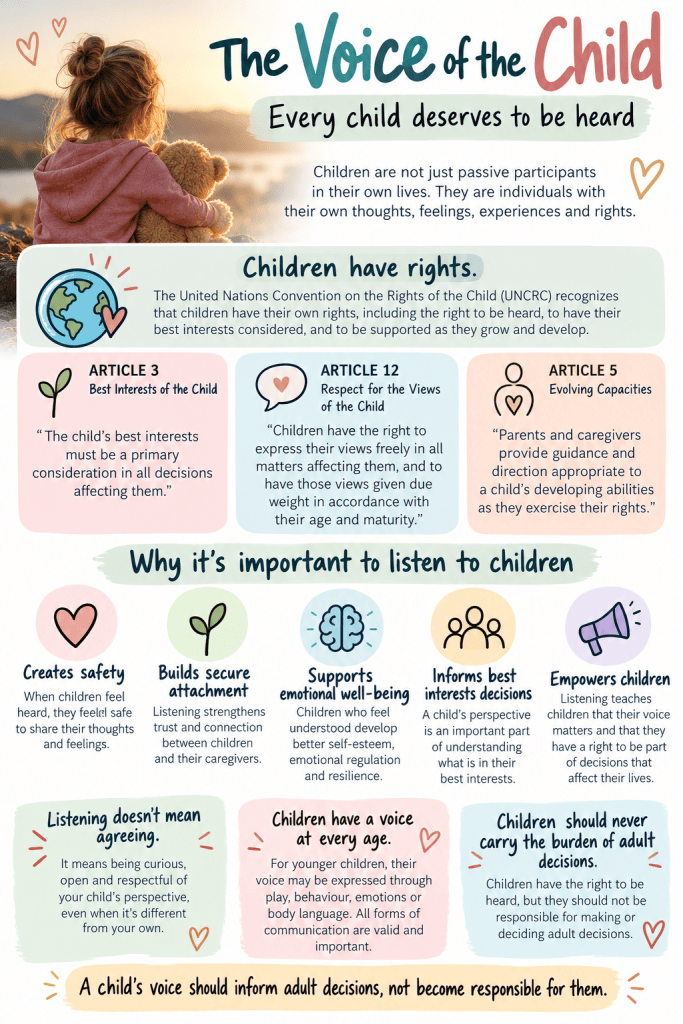
One of the most important things we can do as parents and caregivers is to listen to our children. Not just hear their words, but genuinely listen to their experiences, feelings, needs, and perspectives.
Children have a voice, regardless of their age. And every child’s voice matters.
The United Nations Convention on the Rights of the Child recognizes that children are individuals with their own rights. Article 12 specifically recognizes a child’s right to express their views freely in matters affecting them and to have those views given due weight in accordance with their age and maturity.
This doesn’t mean children should be responsible for making adult decisions. It means they deserve to be included, respected, and heard when decisions affect their lives.
When we talk about the best interests of the child, we need to recognize that children’s perspectives are an important part of understanding what those best interests actually are.
As adults, we sometimes assume we know what our children need. But have we stopped to ask them? Have we created a space where they feel safe enough to tell us how they really feel, even when their feelings or perspectives are different from our own?
Listening to children is about more than communication. It’s about creating emotional safety and building secure attachments.
When children feel heard, understood, and validated by their caregivers, they learn that their emotions matter, their experiences are important, and the adults in their lives are safe people to turn to.
This helps strengthen trust, emotional regulation, self-worth, and the parent-child relationship.
And listening doesn’t mean we have to agree with everything our children say. It means we can acknowledge their feelings, remain curious about their experiences, and respond with empathy rather than judgment.
For younger children, their voices may be expressed through play, behaviour, body language, or emotions rather than words. As adults, it’s our responsibility to remain curious about what they’re communicating.
This is particularly important for children experiencing family separation, divorce, or other significant changes. Children deserve opportunities to share their experiences without feeling pressured to choose sides, protect their parents’ feelings, or carry the responsibility for adult decisions.
Children have the right to be heard, but they should never carry the burden of deciding.
When we genuinely listen to children, we communicate something powerful:
You matter. Your feelings matter. Your experiences matter. And you are safe to share them with me.
Supporting children’s emotional well-being begins with recognizing that they are not simply passive participants in their own lives. They are individuals with unique perspectives, experiences, and rights.
Every child deserves to feel seen, heard, valued, and emotionally safe.
Because listening to a child isn’t about giving up our role as adults. It’s about honouring our responsibility to them.